
E-Waste Management
Zero waste solutions
From E-Waste to E-Value
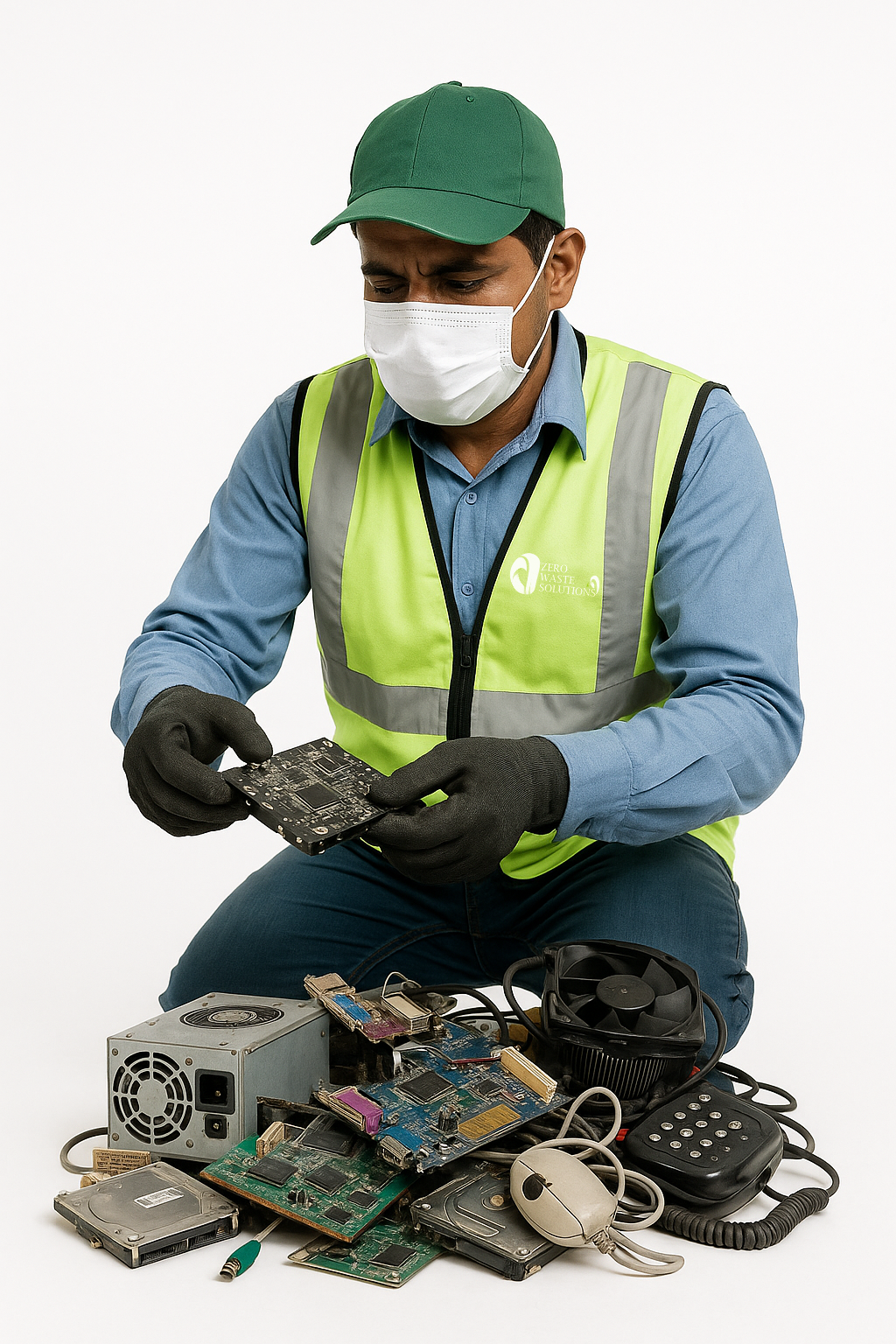
Process
This is a proposed proess which can be tailored as per requirements of the client
1. Collection and Transportation
E-waste is collected from households, offices, industries, and collection centers. Proper handling and labeling ensure safe transport to authorized recycling facilities. GPS tracking and manifest documentation help maintain chain of custody.
2. Sorting and Categorization
Upon arrival, the collected e-waste is sorted into categories such as mobile phones, computers, and household appliances. Items are also separated based on their hazardous and non-hazardous components to avoid contamination. Functional devices may be directed towards refurbishment or reuse.
3. Data Destruction
To ensure privacy and compliance with data protection laws such as GDPR, all data-containing devices undergo certified data destruction. This includes secure data wiping or physical destruction of hard drives, memory cards, and storage devices.
4. Manual Dismantling
Skilled workers manually dismantle electronic items to extract reusable parts and isolate hazardous components such as batteries, mercury lamps, and capacitors. Circuit boards, wiring, and display panels are recovered at this stage for further processing.
5. Pre-processing (Shredding and Separation)
After dismantling, non-reusable components are shredded into smaller pieces. Advanced separation techniques—such as magnetic separation, eddy current separation, and air classification—are used to segregate metals, plastics, and glass for recycling.
6. Material Recovery and Refining
Valuable materials like copper, gold, aluminum, and rare earth elements are recovered using specialized refining techniques. These materials are then reintroduced into manufacturing supply chains, while plastics are processed into granules or other reusable forms.
7. Treatment of Hazardous Fractions
Toxic substances like lead, cadmium, and brominated flame retardants are carefully treated and disposed of in compliance with international standards such as the Basel Convention. Special treatment ensures these harmful elements do not contaminate soil or water.
8. Recycling and Reuse
Toxic substances like lead, cadmium, and brominated flame retardants are carefully treated and disposed of in compliance with international standards such as the Basel Convention. Special treatment ensures these harmful elements do not contaminate soil or water.
9. Reporting and Certification
Authorized recyclers provide transparent documentation, including recycling certificates, data destruction reports, and material tracking logs. These practices ensure accountability and adherence to global standards such as ISO 14001, R2, and e-Stewards.