
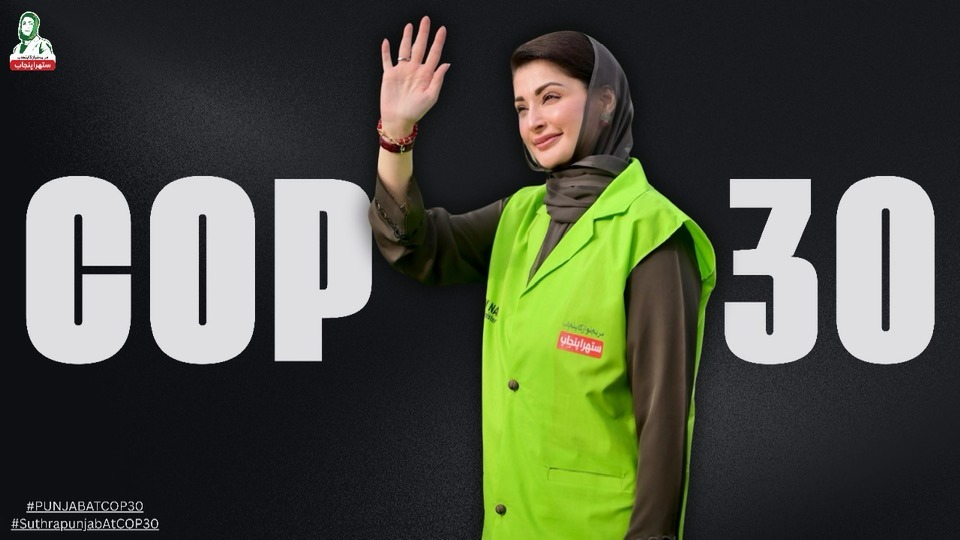
Chief Minister Maryam Nawaz Sharif’s presence at COP30 in Belém, Brazil signals a major leap for Suthra Punjab — her visionary clean-Punjab and waste-management initiative.
Why Her Visit Matters
- First Full Participation for Punjab
For the first time ever, Punjab is formally attending COP30 as a full participant, not just an observer. Maryam says this reflects the province’s climate ambitions and the maturity of its environmental agenda. - Suthra Punjab Is a Flagship Global Story
At the summit, she is showcasing Suthra Punjab as one of the world’s largest and most organized waste management programs — a model for developing regions. - Ambitious Climate Investments
During her COP30 address, Maryam highlighted Punjab’s plans to modernize its waste systems, convert landfills to green forests and solar parks, and expand digital monitoring of solid waste. Pakistan Today+1 - Carbon Finance & Green Growth
At the conference, Maryam met with GGGI (Global Green Growth Institute) to explore carbon finance and develop carbon-credit programs for Suthra Punjab. The Express Tribune - Massive Environmental & Economic Impact
According to a recent “Waste to Value” report, Suthra Punjab now operates in 36 districts, serving a population of 127 million. The program handles thousands of tonnes of daily waste via digital fleet tracking, GPS-enabled waste collection vehicles, and performance-linked contracts. Dawn - Clean Infrastructure & Jobs
As part of her pitch, Maryam emphasized how Suthra Punjab has created 100,000+ green jobs, showing that environmental reform and economic development can go hand in hand. Dawn - Sanitation Powered by Innovation
Ahead of COP30, she also launched 700 modern sanitation vehicles to boost Punjab’s waste collection capacity — a bold symbol of the province’s seriousness about “waste to value.”
What This Means for Punjab
By taking the Suthra Punjab story to the world, Maryam is positioning Punjab not just as a climate-vulnerable region, but as a climate innovator. Her message at COP30 is clear: Punjab doesn’t just want to manage its waste — it wants to transform it, generate green jobs, access carbon markets, and build a sustainable, climate-resilient future.
This visit is more than symbolism. It’s a call for global partnerships to scale up Suthra Punjab’s impact, from clean streets to carbon credits. As Maryam said: transforming waste isn’t just an environmental necessity — it’s an opportunity for leadership.